
Reading Problems: Having a Body
in a word: ew

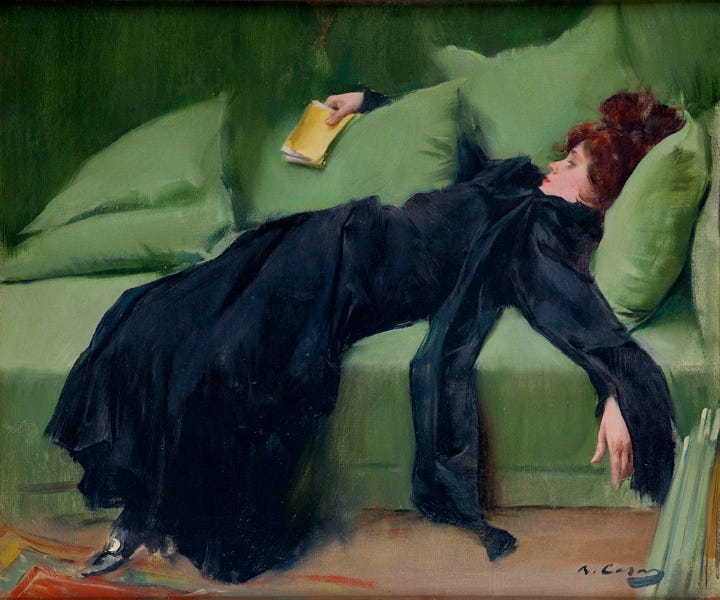
Neither exercising, nor cracking my way up and down the stairs in the morning, nor my face in the mirror, nor a hangover after one glass of wine can remind me so unceremoniously of the fact of aging as much as simply sitting in a chair, reading. What did I used to do with my legs?
Mostly, I love getting older, and refuse to be chastised by the youth industrial complex or whatever we’re calling it now. But reading has started to require more specific conditions. Good light, back support, quiet. My to-do list tamed enough to not intrude. As a child I could read for hours without moving, without a care, truly. The years require a reckoning with physical form.
[I write this from my sick bed, aka the couch. I seem to get clobbered by a virus about once a year, so I won’t complain. Illness forces you to heed your body, your relative health; to acknowledge the privilege of, for example, thinking through a problem, without having to feel disgusting while thinking through a problem. It’s a waking disorientation, the kind you usually can only come by in dreams, and a ritardando to the base-level hurry of modern life. I don’t like being sick, and I’m not trying to romanticize it, but I do respect free weirdness when it happens to alight. It’s often a challenge for me to read when I’m sick. Last night, my eyes felt strange, like I was wearing someone else’s glasses, and I read a chapter of Turgenev’s Fathers and Children with the book very close to my face, glasses off. My head felt stuffed with cotton.]
Anyway, losing yourself in a book is difficult if you can’t get comfortable, but getting too comfortable may lead to sleepiness. I love the idea of reading outside, but I hate being hot, and I hate being cold, and grass is itchy, and I hate bugs. A few years ago I brought a blanket to the yard on a perfect spring day and read contentedly for most of an afternoon, visited once or twice by my kids, and felt afterward like I had really accomplished something. True, I had to keep changing position, and was, actually, sore the next day, but it felt like I had achieved some Platonic ideal of reading, harnessed some real Heidi on the Alm energy. You’d think I’d want to do it again.
I read before bed every night, and it’s a highlight of every day, and my bed and pillow situation is really specialized. For day-reading, I prefer a couch to a chair, because I like sitting longways with my legs in front of me. I just love being comfy so much, plied with blankets, awash in softness. In a chair I prefer to sit cross-legged, but I seem to pay a price for it now. It’s like I have to stretch before sitting for a long period, and then stretch when I’m done sitting. Who has the time? I marvel at people who can sit in a chair normally, without contorting or double-crossing their legs. We talk about “tech neck” and the way we’re all a little disfigured from staring down at our phones, but who has done a long-term study on the physique of readers?
When it comes to audiobooks, I’m almost always moving while listening. I suppose it has become a form of multi-tasking. I started listening to books during the pandemic, convinced it wouldn’t “take.” I’m a visual learner!, I’d demure, when people would rave about the format. Since then, I’ve listened to so many books while walking my dog and folding laundry. It requires as much concentration, for me, as reading from a page. And when I’m “done,” generally something else has gotten done, too, so that’s a weird double win I don’t usually associate with reading.
I love reading in the car on long road trips, and on airplanes. It has been a while since I’ve read on a train, bus, or subway, but I love that, too. On planes I get this hyperfocus—it’s like there’s cabin pressure in my brain. I’m not a fast reader but I gain speed in the air. I’m not comfortable but it somehow doesn’t matter. Maybe it’s the elimination of options bestowed by transportation: there’s only one place to sit, and one way to sit. The distractions are minimal, and the rules and expectations are abundantly clear. You can be vacuum sealed inside your book in a way that regular life doesn’t easily allow for. If I died in a plane crash, I would die with a book in my hands.
I feel like there are some people who are really good at having a body. You look at them and think, yes, that’s how it’s supposed to be. Everything calm and aligned, a sort of serenity emanating from within, happy organs, happy capillaries. They’re good at standing, have nice posture, move with ease. Physical prowess was never my gift, which is maybe why I became a reader. In kindergarten I got my first pair of glasses, though I probably needed them sooner. Kindergarten was when I first needed to look at a blackboard from halfway across the room, and the teacher noticed me squinting like it was an Olympic sport. It was 1982, and “four-eyes” was a popular insult, which I never understood, because to me it seemed cool to have more eyes than usual. Now when I had to wear a patch over my eye in first grade and endure “Cyclops,” that stung a bit. But my glasses had tiny Snoopys on each side, and I remember how miraculous it was to see clearly with no effort besides putting them on in the morning.
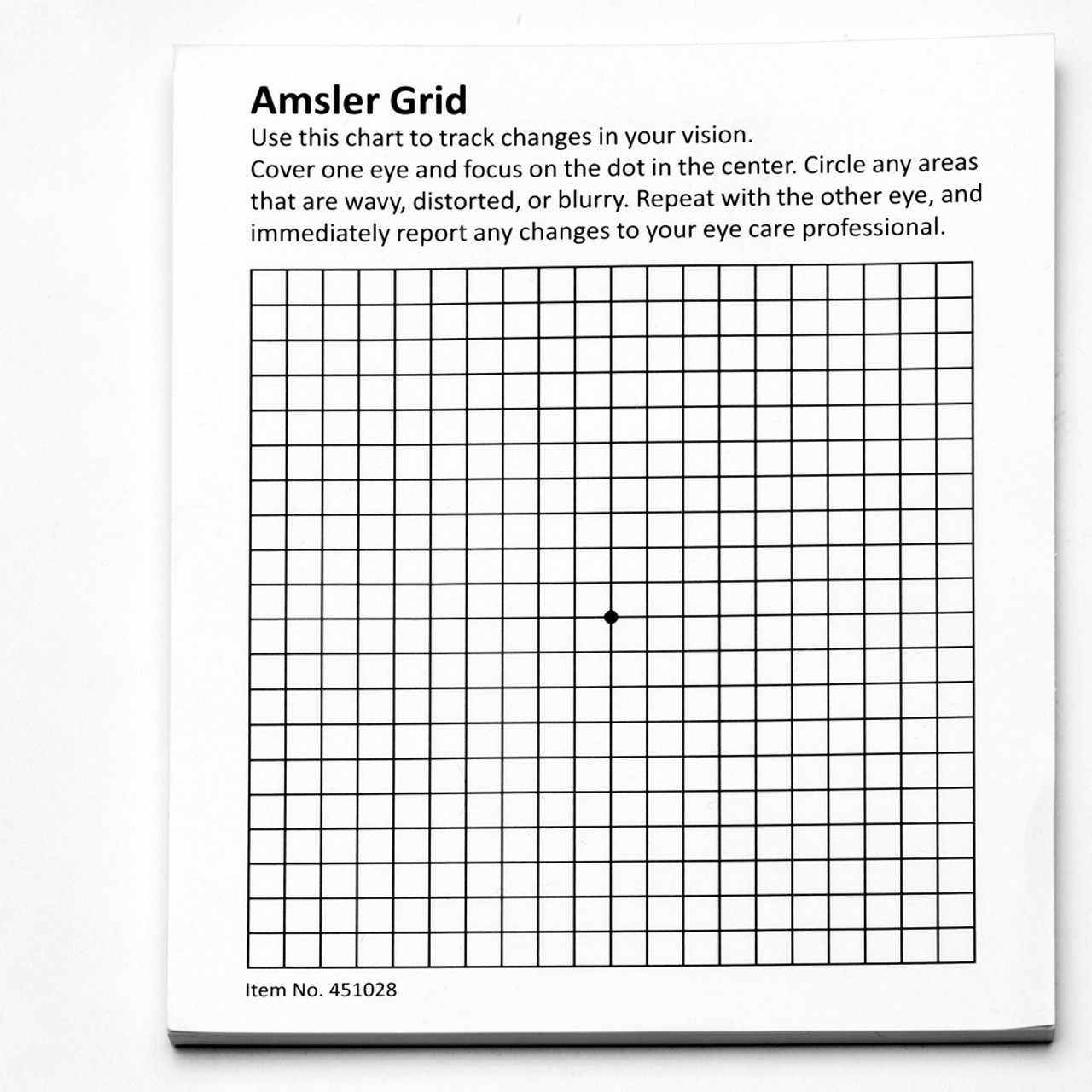
I read a study that found that children of immigrants often have higher incidences of uncorrected refractive error, and that even when adjusting for sociodemographic factors, first generation children have greater odds of vision loss. I think about my eyesight a lot, see multiple eye doctors every year, had a cataract removed before I was 40. When I first started wearing contact lenses in middle school, back when they required nightly cleaning with a mini chemistry lab, I needed the “highest power” that was available for vision correction. By college, my prescription had crept up, but it was no longer the maximum that was offered. As my eyes have gotten worse, vision technology has gotten better. I find solace in that fact when I worry about not being able to read one day.
Eye strain, restless legs, sore joints, pins and needles—the life of the mind has a body, too, unfortunately.
Currently reading:
Fathers and Children by Ivan Turgenev, tr. by Nicolas Pasternak Slater and Maya Slater
Field Notes from an Extinction by Eoghan Walls
Previous entries in the series:
Proposing “book crook” as the literary version of “tech neck.”
Love all of this, as usual. The greatest improvement to my reading life has been a book light that goes around my neck.