
Reading Problems: A Series
cataloging the hazards, curiosities, frustrations, and paradoxes of reading as vocation / reading as love

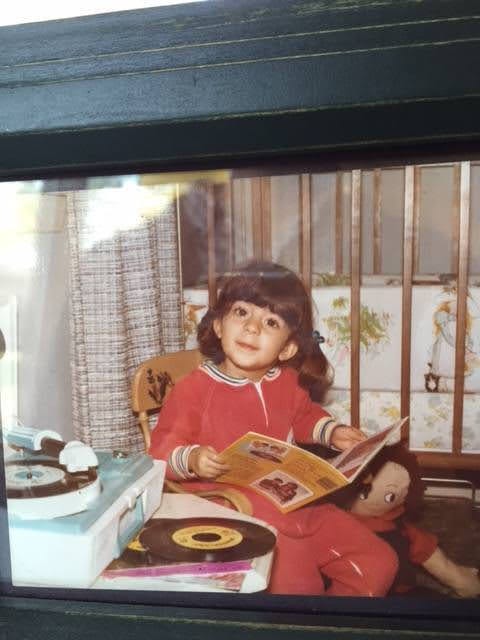
How do we learn what we love? How do we learn what love is? Children learn love by being loved. I can remember my first crush. I can remember falling to pieces over a big teddy bear I’d yearned for and got, finally, for Christmas. But longing isn’t necessarily love, nor is wish fulfillment.
Reading was my earliest love, and books, if I may be far-fetched, loved me back. I fell into them the way lovers fall into each other’s arms. I needed nothing, and no one, if I had a book—good thing, since I was alone a lot. Books were my solace, my companions, my true home. I thought I would be a librarian, and later thought I’d be a teacher, and then briefly a journalist, and still later a professor, and now here I am, owner of a bookstore, and a bookseller. It’s wild to become a version of who you understood yourself to be as a child. And it’s one of the many reasons why I believe, especially as a parent, that it’s important to listen to kids when they tell you who they are and what they want. We have some collective obsession with “outgrowing” things which is, at its core, childish. Evidence only of our own failures, fears, and disappointments, as adults. Young people are often so much closer to the truth—particularly the truth of themselves—than are adults who have denied themselves their own destinies, so to speak, either by choice or by force.
But I digress. This isn’t supposed to be a column about parenting, or childhood, or the tumult of autonomy, though those things may surface. This will be a sporadic inventory, arranged around particular themes, of “problems” that I have encountered as a lifelong committed (and now dare I say professional?) reader.
I’d be remiss if I didn’t mention Sarah Chihaya’s incredible book Bibliophobia, which chronicles the author’s life in books as a maelstrom of individuation and dissolution, pointing to the darker—maybe darkest—side of reading. It’s true that most conversations around reading literature revolve around the benefits (cognitive function! deepened empathy! self-growth and knowledge!), not the potential for harm. It’s also true that if one feels that they’re in a relationship with reading, harm may be unavoidable. All great loves come with certain risks.
While I will cite specific books in this little experiment, and share what I’m currently reading, its overall objective is to identify and explore, in real time, as my understanding permits, a spectrum of “occupational hazards”—mental, physical, social, spiritual, and otherwise—associated with reading a relatively high volume of books.
I should also mention that another great love of mine is talking about problems. And thinking about time. Both of which I may have learned from books, or else found validated by them, since problems (over) time = plot.
I am here for all of this!